Agility through understanding

Published:
20 Apr 2026

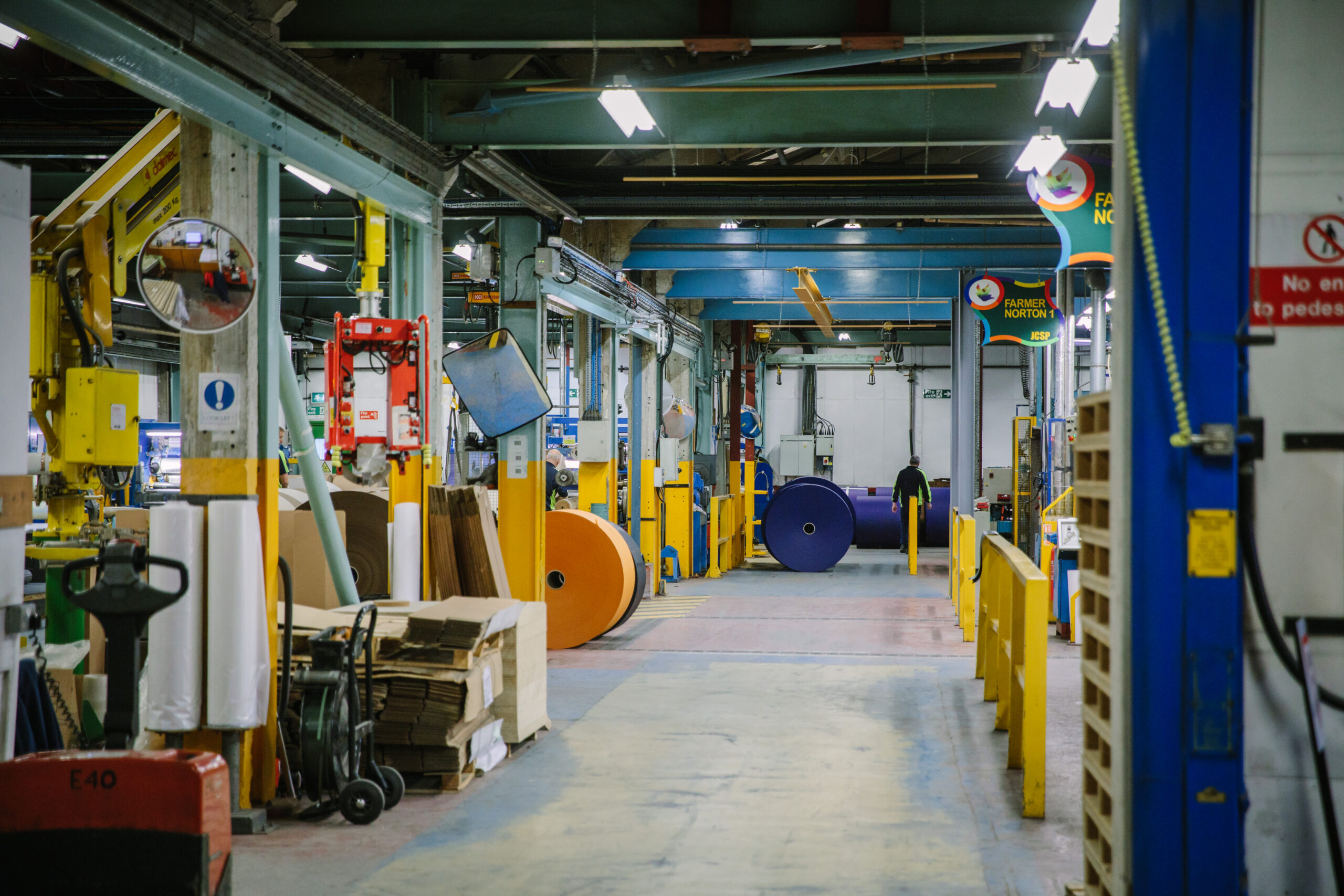
Most production environments are not defined by stability, but by controlled fragility. They appear structured, predictable, and repeatable. In reality, they are held together by a continuous sequence of decisions made under shifting conditions, where small changes rarely remain small for long.

At James Cropper, this fragility is not hidden. It is managed. And over time, it becomes the foundation for a different kind of agility, one that is less about reacting quickly and more about understanding how the system behaves when it is under strain.

For Charlotte Knowles, Head of Planning and Customer Service, that system is both visible and invisible at once. Every week begins with structure, forecasts, capacity, materials, labour, but quickly moves into something more fluid, shaped by the realities of production rather than the certainty of planning.

“My role is making sure that we’re keeping an eye on demand and supply, and that is aligned to what customers need,” she explains. “Trying as much as possible to spot in advance where we might not be able to meet that, so that we can get things back in line.”

Planning, in this context, is not prediction. It is the ongoing management of imbalance.

Because imbalance is constant.
Agility is engineered friction

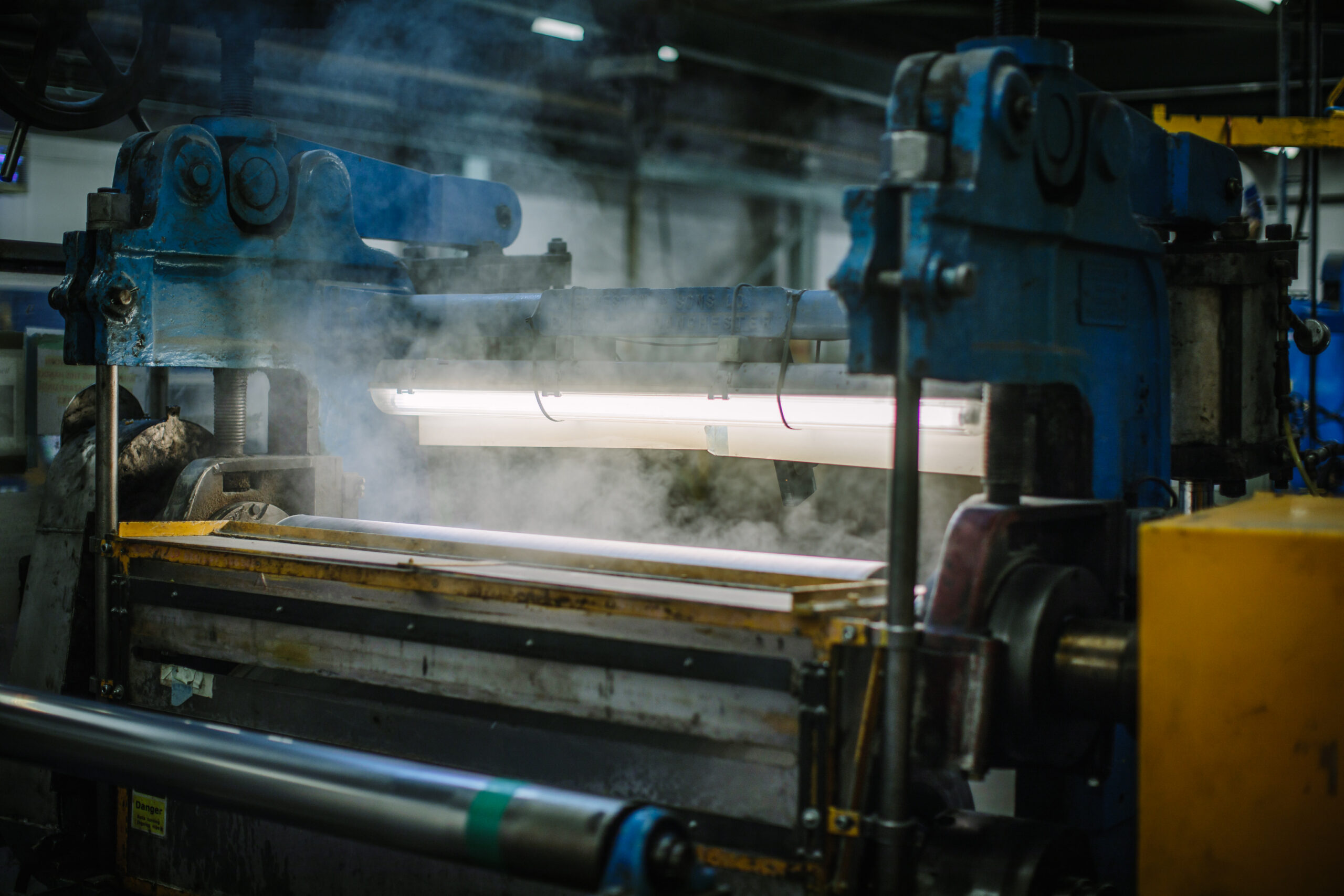
“The way we operate at the moment is on a five-and-a-half-day week,” she says. “At any one time, we can only have two paper machines running. You set out the best laid plan in the world and think, yes, that works exactly right. But all it takes is an engineering breakdown, a loss of crew, and straight away your plan is out of the window.”

What follows is not disorder, but recalibration.

Within paper production, disruption rarely exists in isolation. The system moves in cycles, most notably from white through to black, where sequencing matters as much as output. A change in one part of that cycle affects what is possible in the next.

“Because we run in a cycle, white to black, you miss the opportunity to get colours back into where they should be,” she says. “So then we have to create our own inefficiencies to make sure the customer gets what they need.”

Agility, in this environment, is not the removal of friction. It is the disciplined introduction of it, at the right point, to protect continuity elsewhere in the system.

Every decision carries weight because every decision propagates.

“If I change this here, what’s the impact for engineering, raw materials, downstream processes?” she asks. “Making sure the embossers keep work, the cutters keep work, and that we’re not making things too early or too late.”

The system does not behave as isolated functions. It behaves as a network of dependencies, where responsiveness is less about speed than it is about visibility across those relationships.

That visibility is built over time, through proximity to both process and people.

“I suppose my customer service knowledge and the planning knowledge combined, as well as the internal relationships I have, enables us to stay quite agile,” she says. “You start to know what customers use the products for, how fast they might need to dispatch them.”

Context defines decision quality

Understanding context changes the quality of decision making.

“For example, if it’s stock, we might be able to defer orders but not disrupt supply chains. It’s just building that knowledge to know what decisions need making.”

And then making them.

“To be honest, it’s about trusting that you have got the right information and making a decision, not sitting on it for days or weeks and getting caught out.”

This is where agility stops being operational and becomes interpretive.

It is not enough to see what is happening. You have to understand what it means in motion.

That understanding is not immediate. It is accumulated.

“When I started, the only way I can describe it is I was nosy,” she says. “I wanted to know the ins and outs of everything. I didn’t sit at my desk and wait for people to come to me with the answers. I’d get my safety shoes on, my high-vis, and go down onto the shop floor just asking questions.”

Curiosity, in this sense, is not informal behaviour. It is a method of system mapping.

It creates a lived understanding of how decisions move through production, and where they begin to degrade as they travel between functions.

Over time, that perspective shifts again.

“I’ve recognised how important process is as opposed to person,” she reflects. “If you think you can take on everything yourself, you’re going to burn out. The real skill is taking a step back and thinking, what process can I implement so that if I’m not here, everything doesn’t fall apart?”

Resilience is coherence under pressure

Agility, then, is not individual responsiveness. It is designed resilience.

And pressure is not an exception to that system. It is part of its operating condition.

“One minor thing can throw it all out of kilter,” she says.

The response is not to eliminate pressure, but to structure around it.

“We’re probably quite fortunate to have pressure,” she adds. “Because it is a motivator. If you don’t deliver, you’re letting customers down. There are people internally relying on decisions and clarity.”

What matters is not stability, but coherence under strain.

That coherence is maintained through rhythm as much as hierarchy.

“We have tiered accountability meetings every single day,” she explains. “Shift team leaders meet with operators, then planners, and then it escalates to production managers, warehouse, engineering. At that point, we have to make sure it doesn’t go any further and we get a fix that works for us but also the customer.”

Information is surfaced early. Issues are contained at the right level. Decisions are made before escalation becomes disruption.

Agility becomes less visible, but more dependable.

There is no final equilibrium to reach.

“I find it very difficult to think of a point where everything is done,” she says. “There is always an opportunity to improve. Even if it’s a one per cent improvement, there will always be something we can do to make people’s lives easier and improve the service for the customer.”

Which is perhaps the most precise expression of how such a system actually behaves.

Not through speed. Not through flexibility. Not even through responsiveness as it is usually defined.

But through sustained attention to how fragility behaves, and the discipline to adjust before it becomes failure.

Because the most resilient operations are not the ones that move the fastest.

They are the ones that understand enough to remain coherent when they do not.

Discover more about James Cropper

Discover how James Cropper turns complexity into control through deep material expertise, precision manufacturing, and intelligent production systems.