From creativity to reality: The technical expertise underpinning a paper packaging renaissance

Published:
5 Jan 2026
Every sheet begins with a spark of possibility.

The human story of paper

Paper has been a vessel of creativity for thousands of years.

Poems, plays, paintings, ancient arts like origami, and the spread of literacy itself all owe a lot to this versatile material. And the creative potential of paper isn’t just being explored in the arts. At James Cropper, our Advanced Materials and Paper & Packaging divisions push the material science of paper beyond its limits, developing innovations for manufacturing, electronics, aerospace, and medical applications.

More than any other, though, it’s packaging that proves paper is still the material of the future, even after thousands of years, and we are only scratching the surface of its potential.

Every great pack begins with the right material.

The foundation of creativity

In packaging, paper is experiencing something of a renaissance. It is growing in popularity across markets, with consumers paying closer attention to the experience they receive throughout the packaging life cycle than ever before[1].

Naturally, its renewability and widespread recyclability mean it is easier for consumers to understand its environmental impact when compared to single-use plastic. This also means consumers can enjoy some agency in the fight against waste. When they put paper waste in their bin, they can be reasonably confident that it will be recycled thanks to its high global recycling rate[2]. Given the challenges that exist surrounding the recycling of other materials – especially multi-polymer plastics – this is an important area of innovation for paper.

However, this would not be worth much if paper could not also deliver the level of functional and aesthetic performance that consumers expect. Developing a pack that has a low environmental impact is the easy part. It is much more difficult to do this while ensuring that it can also withstand the journey through the supply chain, and while still looking and performing its best.

It’s here that creativity comes to the fore. Before the artistic elements of packaging design can be nailed down, brands should engage collaboratively with their packaging and material suppliers to ensure that the material used has the right properties. Materials are the foundation of any packaging project. If they don’t perform as intended, every other element of the project will suffer.

[1] https://lovepaper.org/2023-latest-report-reveals-consumers-prefer-paper-packaging/

[2] https://twosides.info/paper-packaging-is-recycled-more-than-any-other-material

Creativity begins with the material.

Mastery and expertise

Fortunately, paper comes with many benefits that make the ideation and design process more effective. For one, it is highly versatile, meaning it offers unlimited creative possibilities.

This is one of the reasons behind paper’s rapid rise as a luxury packaging material. An Ipsos survey from 2024 found that 69% of consumers perceive products packaged in paper or cardboard as more premium. It is much easier to premiumise a pack made from a material that enables brands to utilise vivid colours, crisp printed designs, a huge range of tactile varnishes, embossing and debossing, foiling, and more – all added directly to the pack through efficient automated converting lines.

This kind of freedom means that brands can work with their material suppliers to ensure every detail is controlled to meet their needs. The exact tactile sensation provided by the fibres within the material, the way it holds dyes and pigments, its weight, the way it looks under different lighting conditions – all of it can be mastered and made to work in a brand’s favour with the right level of expertise.

Colouring expectations

Many of these details are interconnected, requiring a more holistic understanding of materials and their properties.

For example, take a fundamental part of any packaging project – colour. Colour accuracy is much more complex than simply adding a blend of dyes and pigments to a material.

First, consider the source of the fibres. Recycled fibres are increasingly used across all packaging segments in response to consumer demands, retailer guidelines, and tightening environmental regulations around the world. However, these fibres can be highly variable. Fibres sourced from office waste, for example, will likely have been artificially brightened. This whitening agent will still be present in the fibre after recycling and will affect the final appearance of any pigments and dyes used.

Even virgin fibres can be subtly different depending on a number of factors. Different species of trees grown in different parts of the world can produce fibres with slightly different absorbency and strength properties. Naturally, this also has an effect on the look and feel of the finished product in some applications.

This can have a surprisingly huge effect on the final colour accuracy of the finished product when metamerism is taken into account. Metamerism is the phenomenon that causes colours to appear differently under various lighting conditions. What looks perfect on the converting line may look like another colour entirely when viewed under store or home lighting. This effect needs to be tested and accounted for during the material development process.

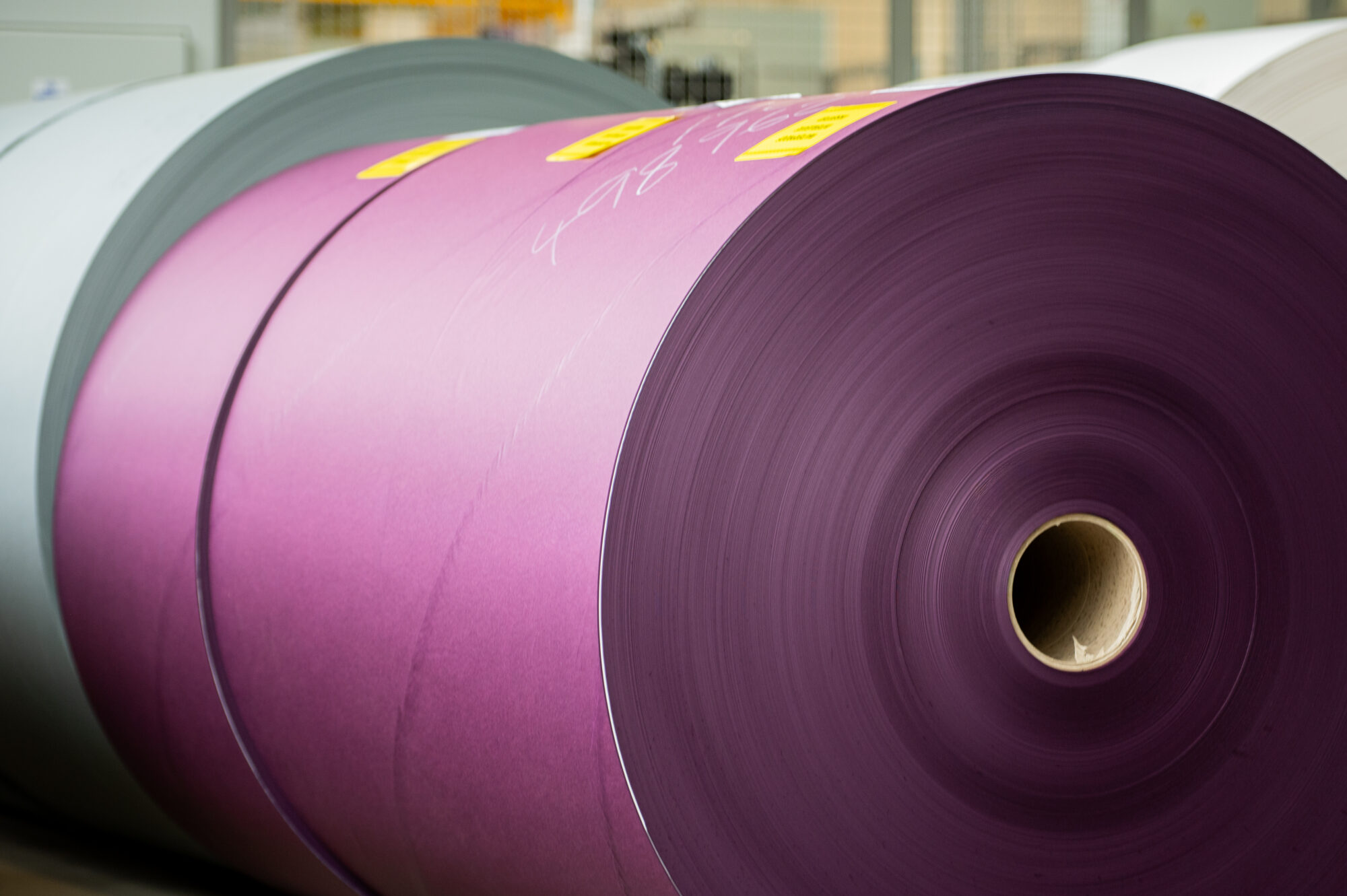
The art of colour begins in the fibre.

Balancing pigments and dyes

The application of the material also needs to be considered. Shelf-ready or display packaging, for example, may require lightfast material that does not fade in direct sunlight. For this application, pigments are preferred over dyes, as they attach to the surface of a fibre and are not damaged by sunlight. They also do not bleed easily when wet, making them an ideal choice for luxury bags and other packaging that might be exposed to the elements.

However, dyes, which are absorbed into the fibre, generally offer more vivid colours, which is hugely important in an era where consumers expect precision, particularly from high-end brands.

A balanced use of both solutions is required to ensure each sheet of paper material meets the agreed colour tolerances. This balancing act can make or break a packaging project, making it a critical part of delivering a creative vision.

All of these considerations are necessary to deliver just a single element of a packaging project accurately, demonstrating the kind of technical expertise that underpins the paper renaissance. Ideas are nothing without the ability to turn them into reality. And, thanks to the industry-leading papercraft of James Cropper, the future of paper packaging is brighter and more vivid than ever.

Turning ideas into vivid reality

Discover how James Cropper transforms ideas into vivid, sustainable packaging. Partner with us to turn creativity, technical mastery, and material innovation into reality.