Turning a recycling lesson into something you can hold

Published:
5 Mar 2026
Biffa brings Whitney the Wasteater to teach kids how recycling works.

Making recycling real for children

Recycling is often explained in diagrams. Arrows chasing each other in neat circles. Percentages. Targets. Systems.

But for most of us, it is simpler than that. It is the bottle in your hand. The cereal box on the counter. The coffee you finish on the school run.

So, when Biffa set out to create Whitney the Wasteater and the Wrong Bite as a children’s book that makes recycling fun and memorable, the ambition was not just to tell children what to do. It was to help them understand why it matters.

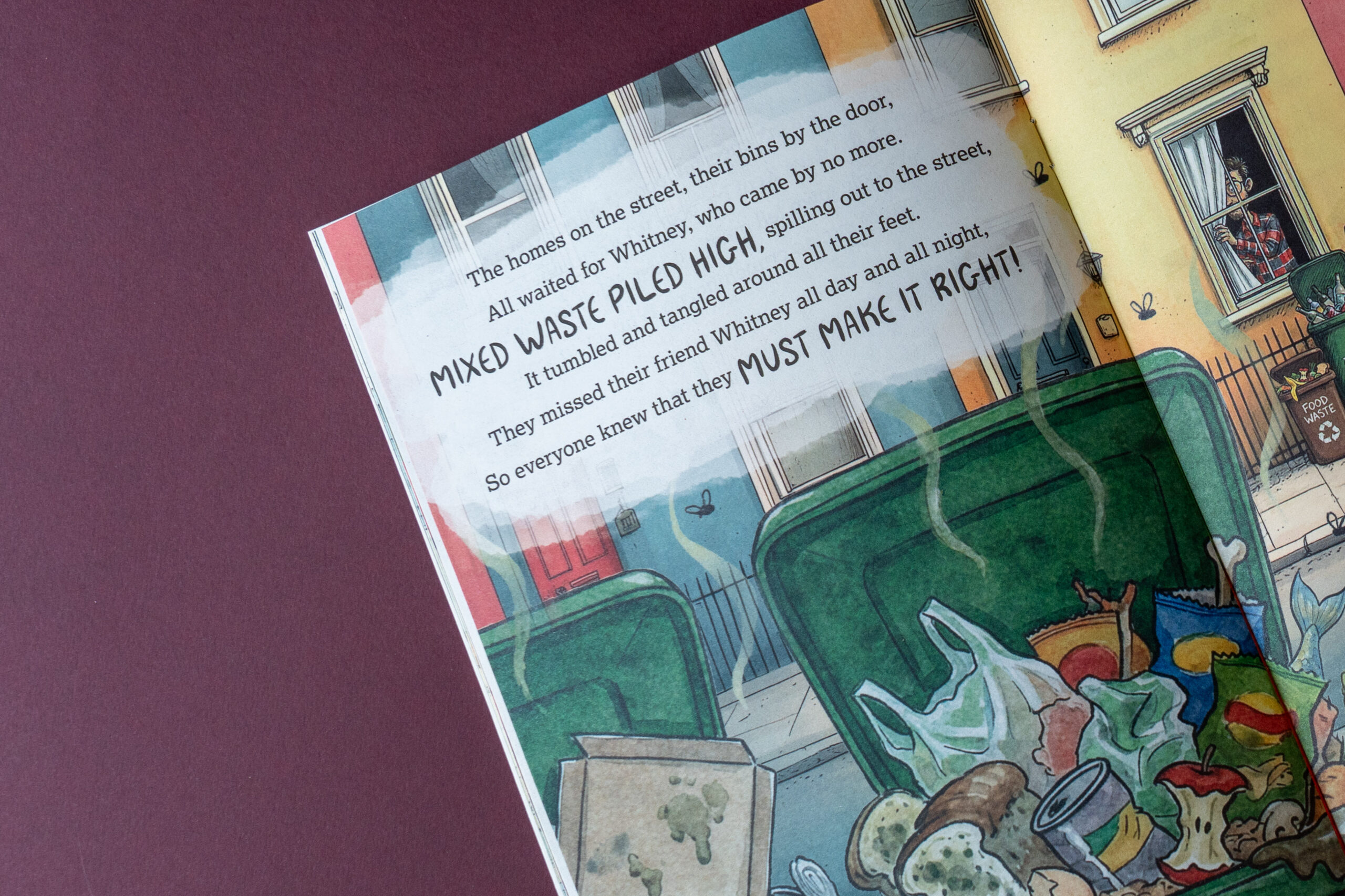
The story follows Whitney, a particular, slightly grumpy Wasteater, who happily devours clean plastic bottles, tins and flattened cardboard, but refuses anything dirty or contaminated. It is playful and imaginative. But beneath the humour sits a serious message. Recycling only works when we get it right.

If that was the lesson inside the book, we believed the book itself should reflect it.

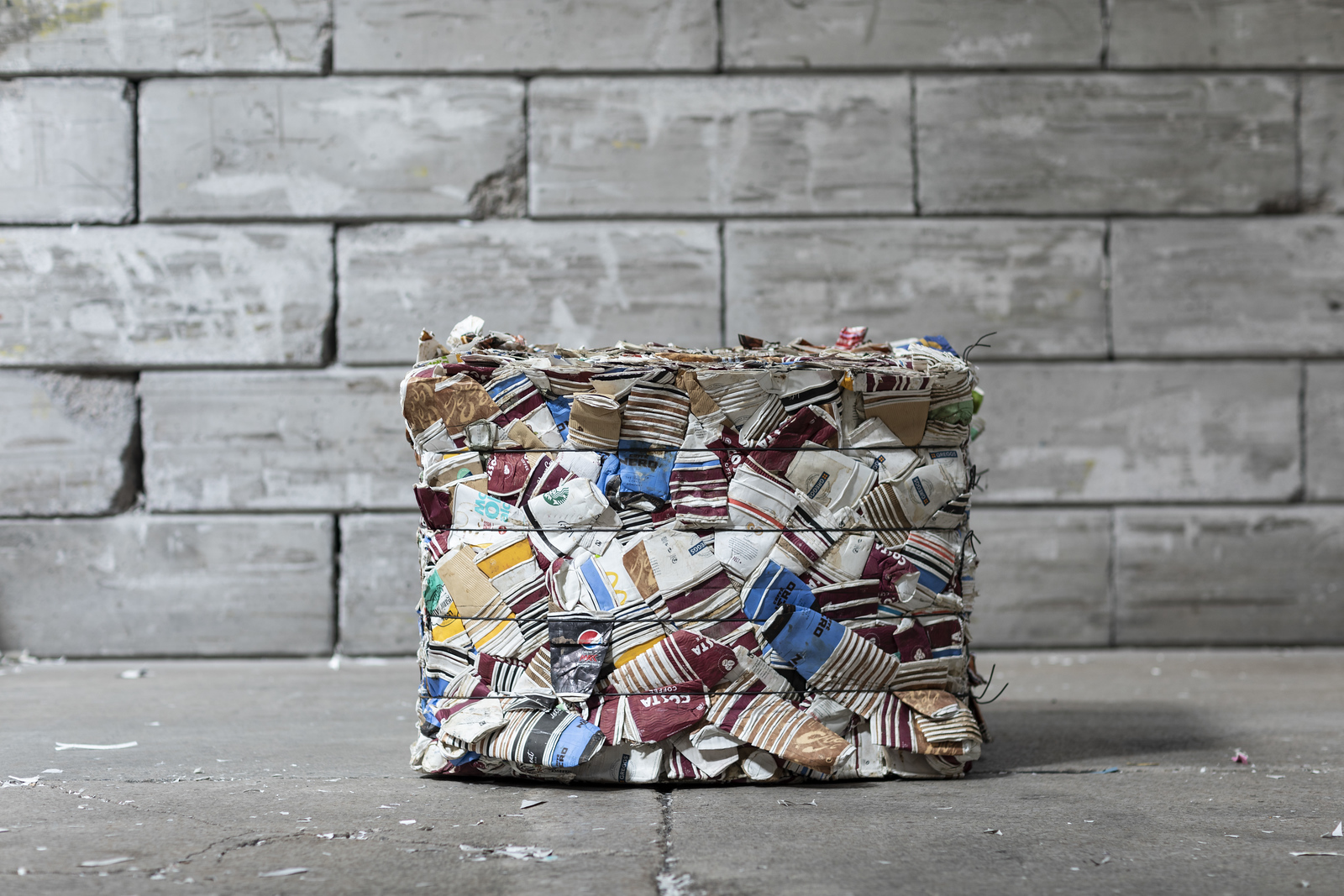
Used coffee cups are turned into recycled paper for the Wasteaters storybook.

Making the message material

At James Cropper, we have been making paper in the Lake District since 1845. Over nearly two centuries, materials and markets have evolved dramatically, but one principle has remained constant. Paper should be purposeful.

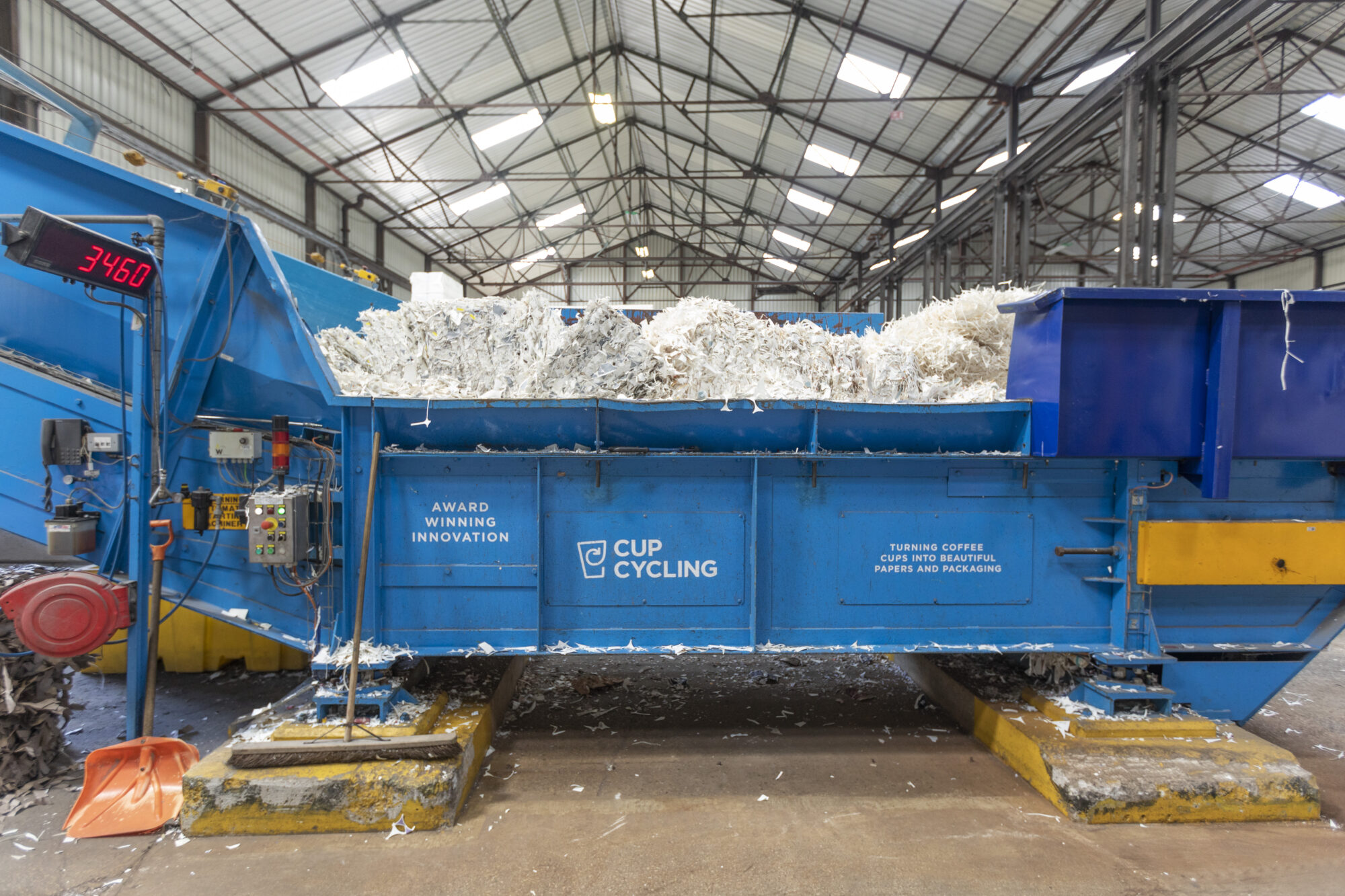
For the Wasteaters storybook, we supplied paper made through our CupCyclingprocess, which recovers high-quality fibre from used coffee cups and transforms it into beautiful, printable stock.

Those pages once had another life. They were part of everyday routines: takeaway drinks, busy mornings, disposable moments. Through careful fibre recovery and refinement at our Burneside Mill, they have been given a second purpose.

CupCycling™ is one of only two commercial-scale processes in the UK capable of recycling PE-lined coffee cups at scale. While we have the capacity to process up to 700 million cups per year, we currently upcycle around 58 million, which reflects not infrastructure limits but whether the correct cups are bought, used and returned for recycling. It recovers 95% of the fibre for reuse while ensuring the remaining lining is responsibly managed through energy recovery. It is not a pilot. It is a fully operational circular solution designed to work at volume.

That is why material choice matters. The cups that can be successfully upcycled through CupCycling™ are PE-lined cups. Many products on the market claim to be fully recyclable or compostable, but without the right infrastructure they may not be processed in practice. Challenging what materials your cups are actually made from is a critical first step in making circularity work.

That transformation quietly reinforces the book’s central idea. When materials are sorted correctly and handled responsibly, they do not become waste. They become resources.

Education that travels beyond the classroom

The Wasteaters programme has been engaging schools and communities since 2016, reaching around 1,000 school visits each year. The relaunch last summer renewed its focus on making the recycling experience approachable, memorable, and, crucially, fun.

This book now becomes part of that ecosystem. It travels home in book bags. It is read at bedtime. It sparks conversations in kitchens about rinsing jars and flattening boxes.

It will also feature in activity around World Recycling Day, connecting storytelling with real-world action in communities.

Major high street brands including Costa Coffee and Greggs are part of this ecosystem too. Customers can return their PE-lined cups to Costa stores to ensure they are collected and brought back into the CupCycling™ system, helping close the loop in a practical, visible way.

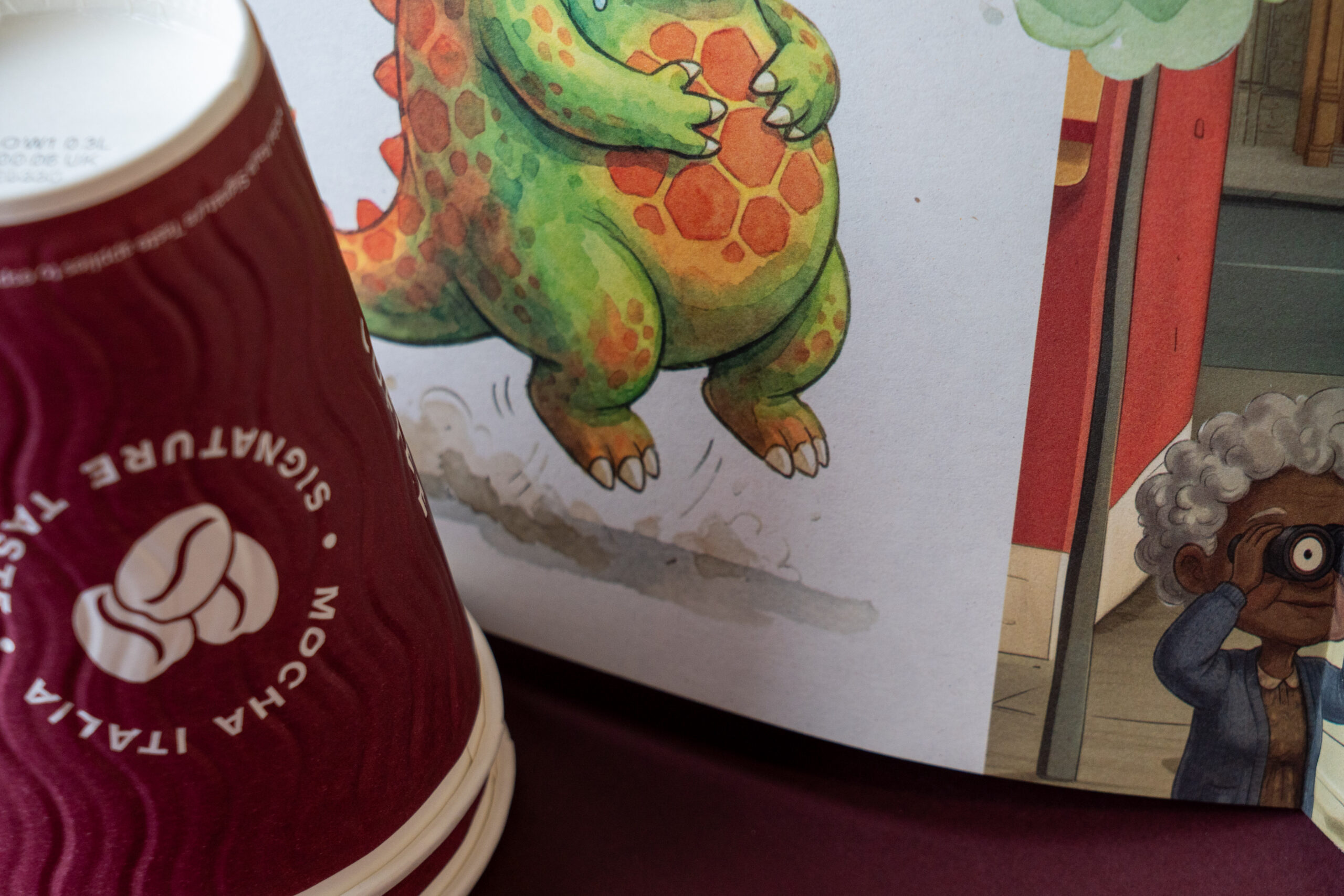
Because it is printed on recycled cup fibre, it becomes more than a story. It becomes evidence.

A parent reading it aloud may well be holding a coffee cup in their other hand. That connection is not theoretical. It is tangible.

Picture by Steven Barber Picture by Steven Barber
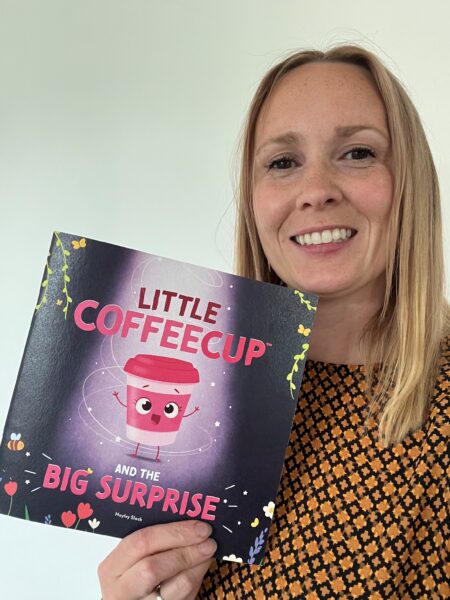
Biffa, WasteAid, and James Cropper show children how recycling works in practice.

Collaboration with purpose

This project brings together shared intent. Biffa’s commitment to practical, community-led recycling education. WasteAid’s global work improving waste management systems, supported by proceeds from the book. And our expertise in advanced fibre recovery and papermaking.

None of us are involved for visibility alone. The value lies in alignment.

Recycling can sometimes feel abstract or distant from daily life. But when children meet characters like Whitney, who insists on clean, dry recyclables and rejects anything questionable, the rules stick. “If in doubt, keep it out” becomes a phrase that is repeated, remembered and acted upon.

When the physical book itself embodies those principles, the message gains weight.

Circularity that scales

We talk often about the Circular Economy. But circularity only works when three things align: infrastructure, innovation and behaviour.

Infrastructure makes collection possible. Innovation makes recovery viable. Behaviour makes the whole system function.

CupCycling™ represents investment in infrastructure and innovation. The Wasteaters represent investment in behaviour. Together, they demonstrate something powerful. Circular systems are strongest when education and material science move in the same direction.

A six-year-old does not understand fibre yield percentages or polymer separation. What they can understand is that things do not have to be thrown away if we look after them properly.

That idea, which is simple, practical, and hopeful, is what makes this project meaningful.

Recycled paper brings storytelling and sustainability together.

Craft with long-term intent

Since we started making paper at Burneside in 1845, expectations of manufacturers have shifted. Quality is assumed. Sustainability is demanded. Transparency is scrutinised.

Projects like this sit at the intersection of all three.

They prove that commercial-scale manufacturing and environmental responsibility are not competing priorities. That recycled fibre can meet publishing standards. That education and industry do not have to operate separately.

Whether we are producing bespoke packaging, specialist technical papers or a children’s book about recycling monsters, the same principles apply. Respect the material, refine the process and ensure the outcome has purpose.

Whitney the Wasteater and the Wrong Bite tells children that their everyday actions matter. The paper it is printed on proves that they do.

When storytelling and material innovation reinforce each other, the result is stronger than either alone.

Circularity stops being a theory. It becomes something you can hold in your hands.

That is where real change begins.

Explore paper that makes a difference

Discover how James Cropper transforms everyday materials into sustainable, high-quality paper and see how we can bring purpose, innovation, and creativity to your next project.