There’s a clear rhythm to how things get made, and it varies by location. Mass production tends to favour standardisation and when you’re running million-metre batches, customisation becomes expensive. The machinery doesn’t want to stop.
British speciality manufacturing operates differently. At James Cropper, we produce over 1,000 unique papers annually. Custom colours, bespoke weights and papers that exist for a single brand, a single campaign, or a single moment.
That requires infrastructure that can pivot and stay agile. Teams that know the machinery intimately enough to adjust it quickly. A business model that values bespoke work over volume. These are conditions shaped by economic geography, by industrial history, by the kind of manufacturing culture that persists in Britain.
The Lake District itself reinforces this. A UNESCO World Heritage Site doesn’t accommodate endless expansion. Growth here means depth, not sprawl. We’ve spent 50 years developing our Coloursource™ palette, a portfolio of signature shades and each one the product of iterative improvement, responding to how light, fashion, and client needs evolve.
That’s a tempo that could only be shaped by location, and responsive in ways that pure scale alone can’t match.
Material memory
Materials inherently carry information. Paper fibres especially hold a kind of memory – how they were processed, what water touched them, the tension applied during formation.
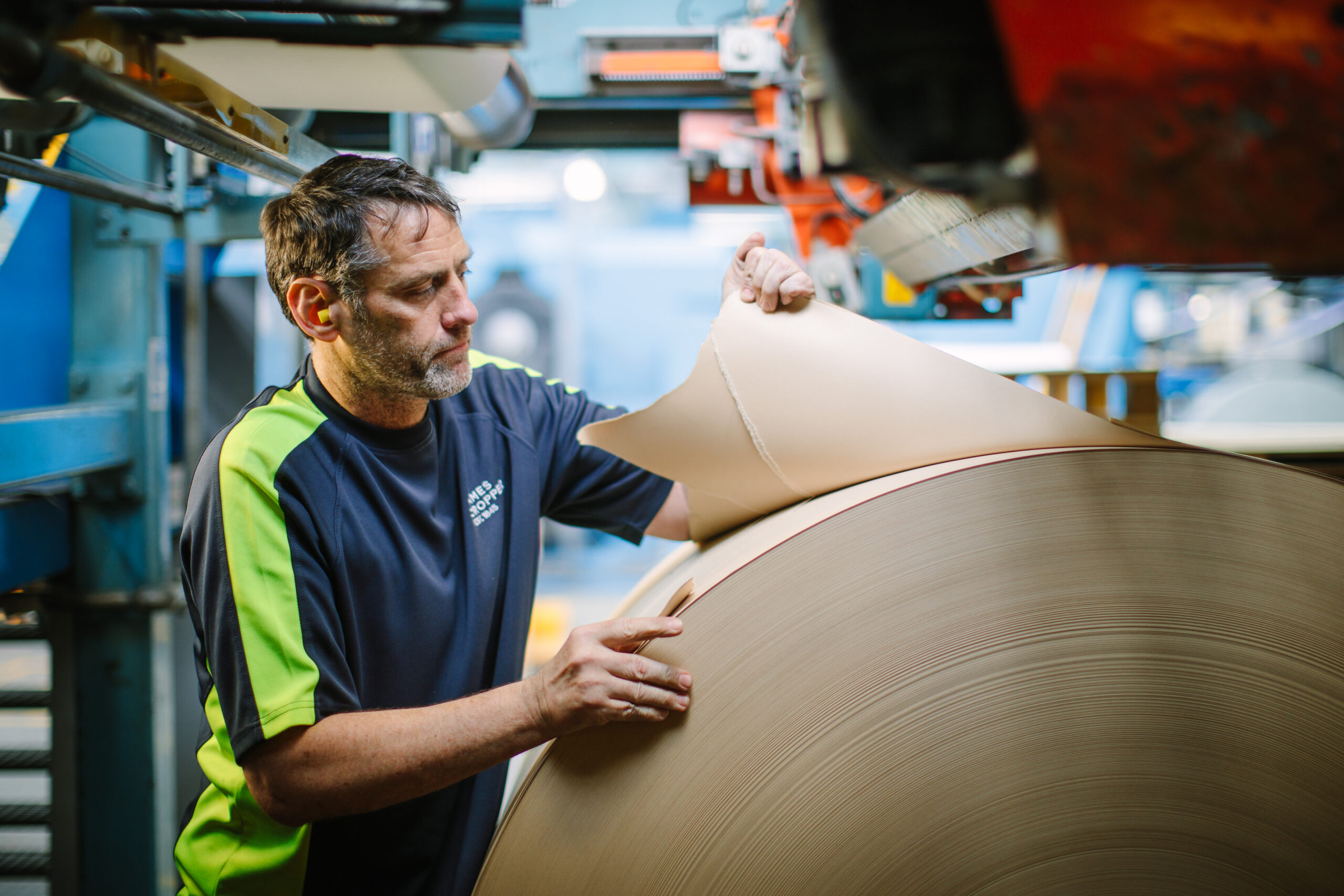
When we make paper at Burneside, those fibres absorb dye, water, and context. The attention of the team developing a custom shade, and the 2,000+ live colour recipes in our system, refined over decades. The sensibility that comes from operating in a landscape where craft matters, where making things by close observation remains economically viable.
The question is, does that travel? When a luxury brand chooses British-made packaging or paper products, they’re buying the conditions that produced it. That includes the collaborative intensity and the technical precision – 184 blacks, 62 whites, colour-matching to delta-E tolerances that most suppliers won’t attempt. The difference is that with James Cropper, someone stood at a vat in Cumbria and watched that exact batch being made.
In a globalised supply chain, where certain packaging elements can be functionally interchangeable, location of production becomes a form of differentiation through the material qualities that place enables.
British-made, especially in the case of James Cropper, is a creative asset. It allows rapid prototyping with client present, bespoke colour development at accessible distances, sustainability commitments shaped by UK regulatory and cultural expectations.
So yes – packaging carries its location as an embedded quality, rather than a label.
When a customer opens a box made from James Cropper paper, they’re encountering Burneside whether they know it or not. The precision of that colour match, tuned under Lake District light, is a product of geography. The tactility of that substrate, formed in water drawn from the River Kent and handled by a team with generational knowledge.